We’ll Pick Up Next Week · Vol. 7
The text to send the day after game night
One message that keeps your campaign warm all week, and what happens when solo players share a room.
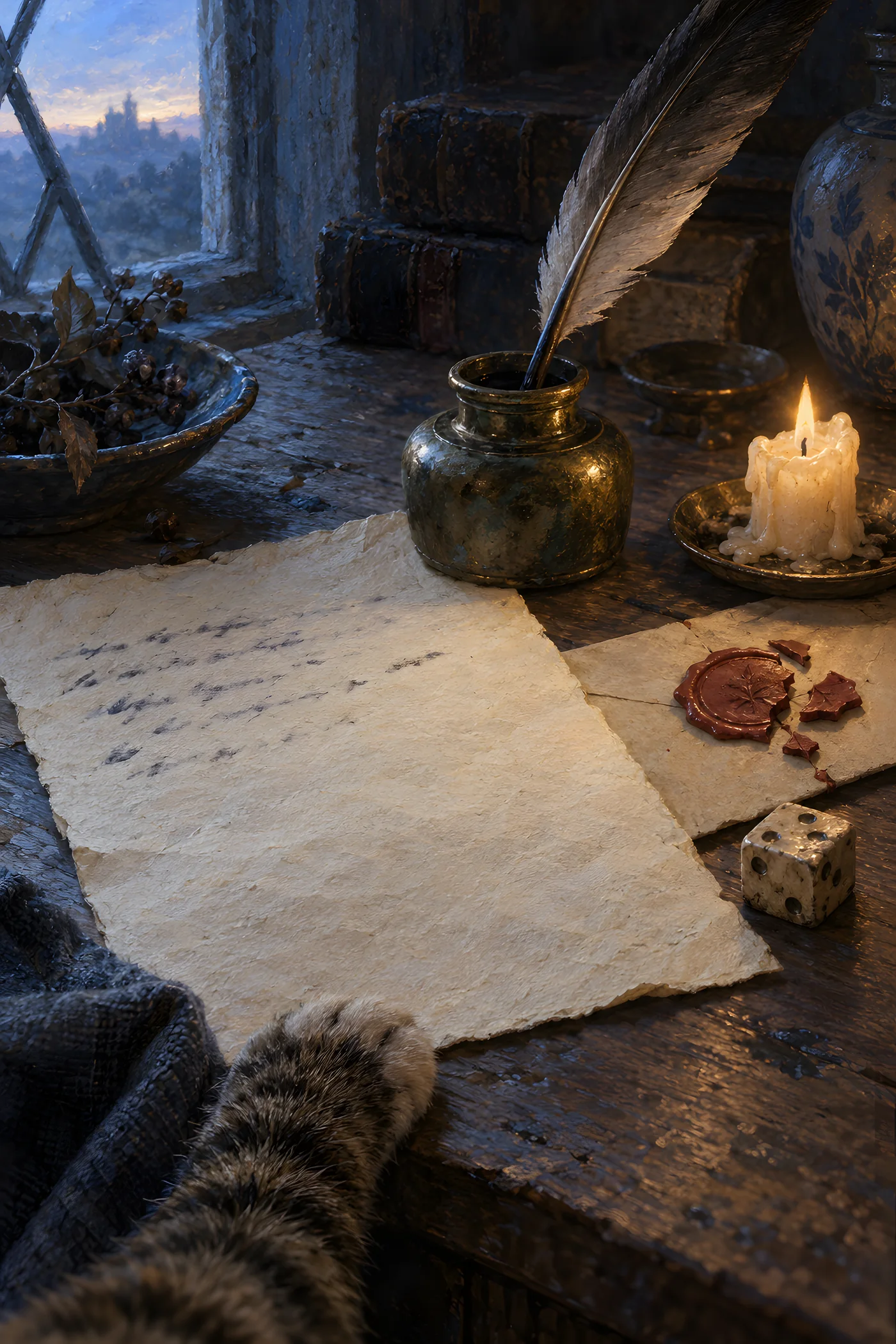
Hey y’all,
Welcome to Volume 7, and welcome back to the workshop.
Depending on where you live, it’s fall, and winter is coming (cue the obligatory Game of Thrones jokes). However, just like the weather, sometimes a campaign can go cold. So, let’s talk about the quiet way a campaign’s energy dies and what we can do to avoid it. Usually, it isn’t a bad session. Instead, it’s the one to two weeks after a good one. Everybody leaves buzzing, then real life closes back over the top of it, and by the time you’re all at the table again the whole thing has gone cold. Next session opens with a half hour of recap and at least 10 minutes of “wait, who was the villain again?” and all the momentum you built together is just gone.
We’ve all been there, and frankly, it sucks for players and GMs alike. There is some upside, though. You CAN fix it, and it starts with something as simple as a text.
The letter · Free, on Substack Subscribe
THE WEEK AFTER: one question for the group chat
The morning after game night, or a couple of days later, send the group one message. Not a recap. Recaps are homework, and at least half the table never reads them anyway. Send a question: “What’s your character thinking about today?”
One sentence, in character, answered whenever they get a minute between meetings.
It costs you nothing, and it does three things at once. It keeps the world alive in their heads all week while they’re on their commute or standing in line for coffee. It tells you what actually landed last session, which isn’t always what you thought it would be. I’d bet about half the time, somebody hands you next week’s plot without meaning to, because they answer with a worry or a plan you can build the whole night around.
Here’s what that looks like in practice. Sunday night, the party barely makes it out of the flooded crypt, and the cleric burns her last healing spell on a stranger they pulled out of the water. Monday morning you text, “What’s your character thinking about today?” The fighter says he’s thinking about lunch, which honestly tracks. The rogue wants to know what the stranger was carrying. And the cleric says she can’t stop wondering why he never said thank you. THAT’s your next session. The stranger wakes up, and he isn’t grateful at all. You didn’t write a word of it. She did. There are lots of iterations of this. The day after, the mid week, two times a week with different questions. If you have long gaps, touch base every week. Bring some attention back to the tension and the narrative. It doesn’t have to be big, it just needs to happen.
Change the question up when it gets stale. Some weeks, ask the players instead of the characters: “What do you want more of next time?” Then write down what they say and give it to them. There’s no faster way to look like a genius GM than handing people the thing they just told you they wanted.
I’m not suggesting you run à la carte games where a text determines the direction of the entire story (although THAT might be a fun game idea on its own...). What I’m saying is keep them engaged. It doesn’t have to be long-form crafted writing, it doesn’t have to be deep side story narratives, it doesn’t even need to involve dice. Just shoot out a text, and trickle their responses into the good stuff you already wrote, then watch them light up when it happens. You won’t be disappointed, and neither will your table.
THE FIND
Some weeks the group just can’t get together, and that’s where this week’s Find comes in: “Playing Solo RPGs Together” from The Soloist, Patrick Buechner’s newsletter about solo and co-op play. It’s a guest piece by Asa Donald, who designs solo games and got invited to run one, SPINE, for a room full of strangers at a convention. Everybody played alone, side by side, then talked it all through afterward. My favorite bit is a player comparing it to a movie, the kind you want to talk about after you walk out. That’s the same itch the day-after text scratches. Go read it, then if you love it, subscribe while you’re there. It’s free: The Soloist.
FROM THE WORKSHOP
The world should keep moving while the party’s away, otherwise the week away doesn’t cost anything. The Faction Ledger tracks what your villains and factions are doing between sessions, so the party comes back to a world that didn’t just sit and politely wait for them: Faction Ledger.
The always free stuff: The Night’s Ledger, which is two quick prep sheets for game night; the Player Cheat Cards, which keep the rules accessible in a player’s hand instead of in three different books; and The Sundered Page, our whole one-page game you can run tonight. Grab them at The Night’s Ledger, Player Cheat Cards, and The Sundered Page.
The entire shelf of free and paid stuff all lives at sleepersartifice.com. Come poke around.
ALSO WORTH YOUR INBOX
Insight Check. Adam Wright writes about running games and the history of the hobby, and he’s written published scenarios of his own. Start with his post “What I Learned From Running My Own Scenario at a Convention.” Seven strangers sat down at his Call of Cthulhu table, and like every table ever, they jumped on the clues he thought were minor and walked right past the ones he thought were obvious. He also admits the whole session is gone from his head the minute it ends, which is why he takes GM notes while he plays. It’s a different spin on the same lesson as the day-after text: you don’t know what landed until somebody tells you: Insight Check.
Thanks for hanging with me. If this was useful, forward it to someone at your table. That’s how this thing grows. And if you write a newsletter too and this feels like a fit, hit reply. I’m always looking for good neighbors to recommend. We’ll pick up next week.
-J
