We’ll Pick Up Next Week · Vol. 12
The empty chair
One question to text the player who can’t make it, so their character leaves on purpose and comes back with something, a knight’s tale told one chapter at a time, and a walking tree that carries a village.
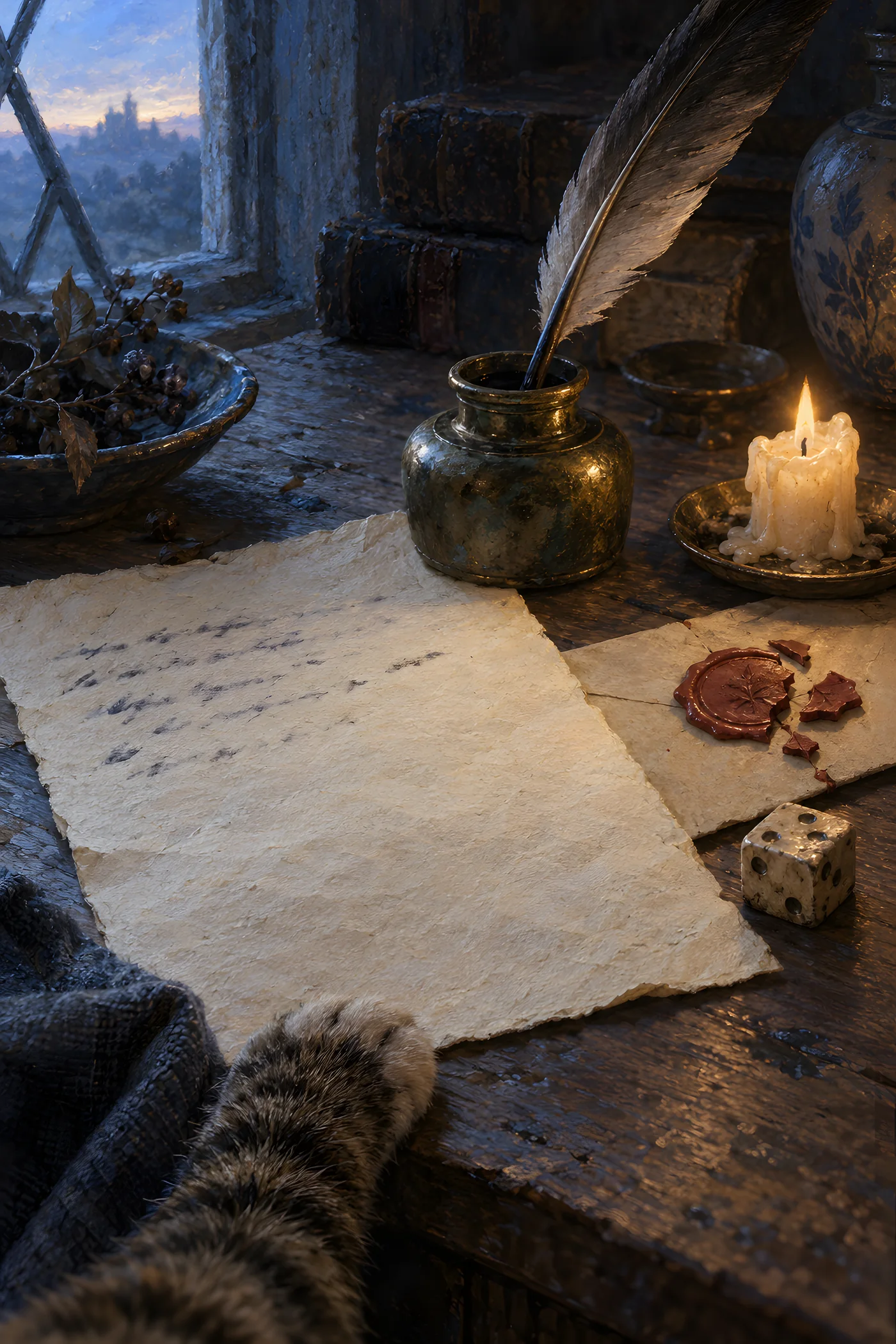
Hey y’all,
Welcome to Volume 12, and welcome back to the workshop.
Thanksgiving is next week, which means this is the stretch where somebody at your table has a flight, a family thing, a work deadline, or a cousin’s wedding, and the group chat fills up with “can we still play with four?”
You can, and most of us do, but the missing character is where it gets awkward. Either the fighter stands in the corner of every scene like a piece of furniture, or somebody else runs his sheet and he dies in a fight his player never saw, or he just blinks out of existence until next session and nobody mentions it. All three feel wrong, and the player who missed comes back to a game that moved on without them.
We’ve all been on both ends of this one. When you’re the one who misses, you come back feeling like you skipped a chapter, and everyone else is talking about a fight you weren’t in. When you’re the one running short, the whole night feels a little lopsided, and you spend half of it working around the hole.
Here’s the thing, though. The empty chair is a gift if you treat it like one. The character didn’t stop existing when the player got on a plane. They went somewhere, and the player who’s missing is the perfect person to decide where. So you ask them one question before the session, and you let their answer do the work.
The letter · Free, on Substack Subscribe
THE QUESTION: where does your character go, and what do they bring back?
Text it to the player who can’t make it a day or two before game night. One sentence back is plenty. “Marlo goes downriver to see his sister, and he brings back a boat.” “Bex stays in town to sell the loot and comes back with a buyer who wants more.” “Tam goes looking for the hermit and comes back with a limp and a map.”
Next you need some rules to keep it clean. Here are 3 that I find work well:
The character leaves on screen. Give them a reason at the top of the session, in the fiction, in one line. “Marlo’s sister sent him word. He’s taking the morning boat, and he’ll be back in a few days.” The table hears it. Now nobody spends the night wondering where he went.
Nobody else runs the sheet. The absent character isn’t in the fight, so nobody rolls for them and nothing can kill them while their player is gone. They have business somewhere else. That’s the whole point of this exercise after all.
What they bring back has to matter. If Marlo comes back with a boat, that’s a new way to get around. It’s also a hook or something and a sister who needs something from the party. If Bex comes back with a buyer, that buyer wants more than she has. Now the party has a lead OR a job, depending on how they play it. If Tam comes back with a limp and a map, the limp is going to slow the party down for a while, and the map had better be worth it. Before the next session, take five minutes and decide what the thing costs or what it opens up, and then hand it to the player the minute they sit back down.
It’s simple, but that’s the whole thing. The player who missed comes back into a scene that’s theirs, and for the first ten minutes they’re the only person at the table who knows what happened in Ferrytown, which beats sitting through a recap of a fight they weren’t in. The rest of the table gets a new thing to argue about, and the only prep you did was send one text on a Monday.
Here’s what that looks like in practice. The bard’s player is out for Thanksgiving week. You text the question on Monday, and the answer comes back from an airport: “Marlo goes to see his sister in Ferrytown and brings back a boat.” At the top of Tuesday’s session, Marlo takes the morning ferry downriver, and the rest of the party clears out the bandit camp without him. When the bard’s player comes back the week after, you open on the dock at dawn, with a flat-bottomed river boat tied up and Marlo’s lute case sitting in the bow. It’s his sister’s boat. She lent it because the bank is about to take her mill, and she’s hoping her brother’s friends are the kind of people who fix that sort of thing. Now the party has a boat and a job, the bard’s player has a scene that belongs to him, and nobody at the table remembers that he was gone.
There are two edge cases worth looking at quickly. 1.) If the player doesn’t answer, don’t chase them through their holiday. Pick a boring errand yourself (they went to get the armor fixed, and they come back with the bill), and let them fill in the rest when they’re home. 2.) If two players are out, ask both and let the answers work together.
Listen, I can hear the comments now. I’m NOT saying hand the absent player the plot (although a boat and a sister got more done than most of my quest-givers and hooks…so maybe I’m off on that). What I’m saying is that the empty chair doesn’t have to be a hole in the session. Somebody is missing, and that somebody can tell you in one text where their character went and what they’re bringing home. Ask the question this week. Most of the time the answer gives you more to work with than anything you’d have written on your own, and the player gets to walk back in with something that’s theirs.
THE FIND
This week’s Find is for the weeks when the whole table can’t make it and the empty chair is yours. Alone in the Realm is DV’s newsletter of solo actual plays, and they post something almost every other day. The long one is a solo run through Dolmenwood called A Knight’s Tale, which just hit chapter 25, and alongside it there’s a Mothership crew, an Obojima game, and a new season of Achtung! Cthulhu that started this month. Every play comes as a written session report and as a podcast episode, so you can read it or put it on in the car. If you’ve ever wondered what solo play actually looks like at the table, this is the easiest way to find out. Go read one, then subscribe while you’re there. It’s free: Alone in the Realm.
ALSO WORTH YOUR INBOX
TheZebraCode is a one-person design diary for Kivaru: Wildsong, a tribal science fantasy game set on a living planet, and the posts are worth reading even if you never play it (but you should!). The one to start with is the creature design walkthrough for the Diviners, which are sentient trees that carry whole villages in their branches and were named by the tribes for their knack for sensing water. You get to watch the author try legs, then centipede roots, then faces, and throw each one out until the trees end up hauling themselves along on their roots and up the occasional cliff. The newest post is a guide to getting started with solo play, written by someone who plays on a phone and knows which apps are worth the spend, with a game recommended for every kind of solo player (most of them free!). If you want to watch a game get built one decision at a time, this is the place to do it: TheZebraCode.
FROM THE WORKSHOP
Finally, if a cousin ends up sitting in the empty chair over the holiday, the Character Speed-Sheet gets them from a blank page to a playable character in about twenty minutes. It’s one guided page with the steps in order, and it has a walk-in lane for the night somebody needs a character right now: Character Speed-Sheet.
The always free stuff: The Night’s Ledger, which is two quick prep sheets for game night; the Player Cheat Cards, which keep the rules in a player’s hand instead of in three different books; The Sundered Page, our whole one-page game you can run tonight; the Encounter Complications sample, six cards from the deck so your table can try it out; and The Dreaming Court, a warlock subclass that’s pay what you want. Grab them at The Night’s Ledger, Player Cheat Cards, The Sundered Page, six-card sample, and The Dreaming Court.
The entire shelf of free and paid stuff all lives at sleepersartifice.com.
Thanks for hanging with me this week. If this was useful, forward it to someone at your table. That’s how we grow and how we share more ideas. If you publish in our space, hit reply. I’d love to see your work and maybe feature it in an issue. I’m always looking for good neighbors to recommend. We’ll pick up next week.
-J
